For How The Bells Toll
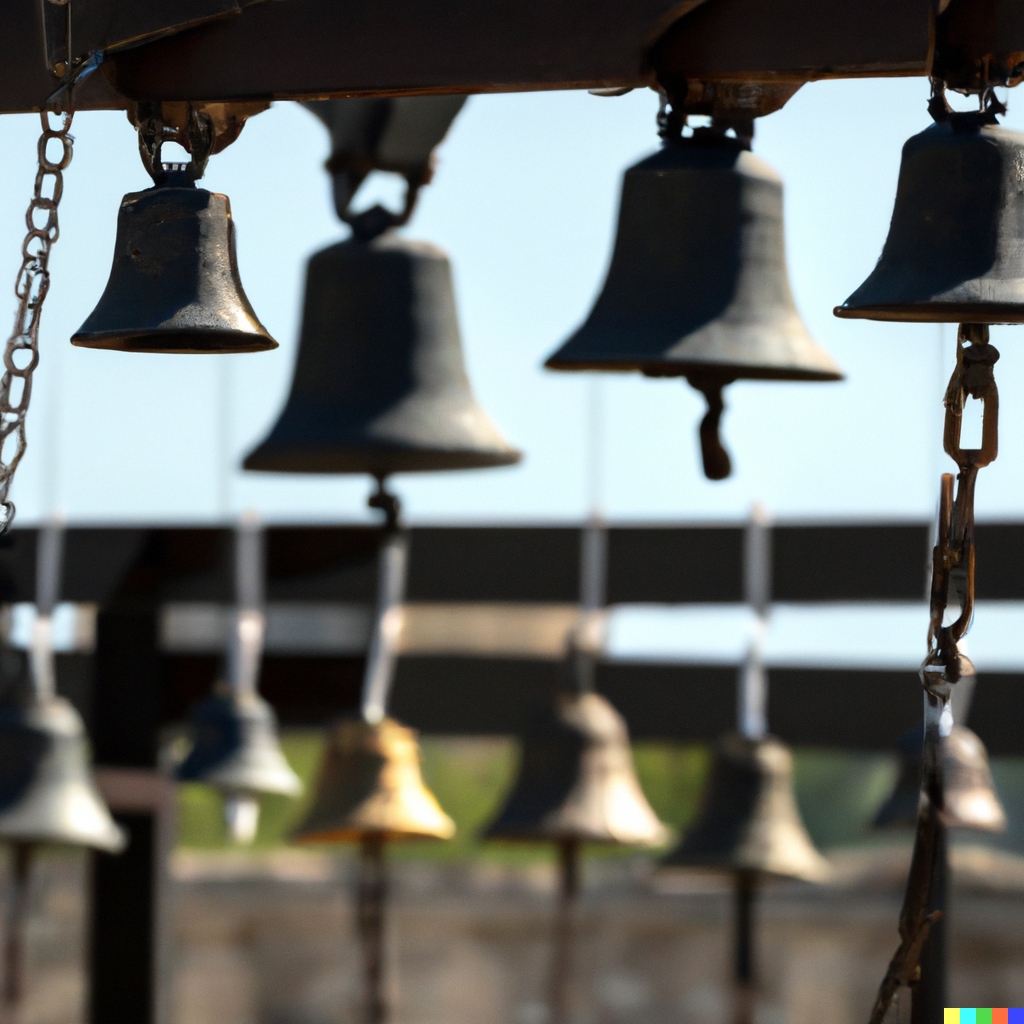
In the heart of Ringwood, sunsets bathed the cobbled town square in a rich crimson, reminiscent of spilled wine. The square was the nucleus of the town’s social life; as night approached, stories , of love, of loss, of adventure , flowed as freely as the local brew. Every evening it came alive with the raw emotions of its inhabitants and bridged the taxing endeavors of the day with the serenity of the night.
Plota, a wise old soul, identified by her classy-looking silver hair and a worn-out shawl, was a local celebrity. The one they flocked to. Her stories whispered forgotten emotions from the past, told with a passion that made even the young listen. She was respected enough to be given that spot near the ancient oak, the same spot where Dave, a young, contemplative man with an air of mystery, would also often settle.
One historical evening, as the sun looked for its pajamas and the stars began their evening dance, Smith, a renowned tinkerer and craftsman, presented his creation: a system of bells, intricate and beautiful. “These bells will immortalize our tales. Every time we laugh, the bells buzz with us. The day we mourn our elderly, the bells will take a sigh. And on evenings we are up and about with colors and festivals, the bells shall dance and join us in the expression,” he proclaimed. Loud cheers followed the demonstration all around. Plota, glancing at Dave, whispered, “When we change how we share, we change what we share.”
The bells, installed in the town square, were not mere passive listeners. They seemed to have a life of their own, chiming to stories shared aloud. The chaos in the town square now had a language expressing itself through the chimes, and within a few months, the bells became an integral part of the town. The ephemerality of raw emotions now lasted a bit longer in the air, there for all to feel.
Something changed in a few months. Ringwood’s conversations, once intimate, now treaded carefully. Words were weighed, stories sanitized. The square, once the bastion of raw emotion, started feeling like a theater. Tales were rehearsed, their edges smoothed, lest a private sentiment inadvertently ring a bell. Plota felt it first, the stifling of her stories. She shared fewer, and Dave’s once curious eyes began reflecting a shared concern.
Their worst fears materialized when a young woman’s private confession of infidelity to her lover was inadvertently broadcast by the bell, leading to an unprecedented public shaming of the young lady and undermining the town’s sense of communal trust. Ringwood was no longer a haven for genuine discourse. Trust diminished, relationships fractured. Some grew silent, while others became louder than ever before. The bells, instead of celebrating stories, began to dictate them.
Plota, lost in nostalgia, lamented the bygone era, while Dave, ever the thinker, contemplated the consequences of Smith’s invention. In shared silence, they realized that Ringwood had to reclaim its voice. Yet, this was no trivial puzzle to crack. Ringwood was now the crown jewel among the towns. The bells were a source of envy among the neighboring towns. Yet, the bells were secretly annihilating their old culture. “It’s like we can’t live ‘with or without’ them,” Dave sighed.
Inspired by a story from Plota’s vast repertoire, they sought a balance. The intent was not to eliminate the bells but to harmonize them with the town’s heartbeat. They proposed turning off the bells in the last hour of dusk and turning them back on in the second hour of dawn, creating that little space for the old-school unfettered public conversations. The square, which once embraced Plota’s tales, suddenly saw her with cold stares. As Dave explained their intent, a murmur arose. By seeking to change the nature of the bells, they were perceived as meddling with Ringwood’s identity.
This idea splintered the town; some saw promise, while others viewed it as regressive. Heated debates escalated into violence. The arguments grew so bitter over time that they led to fistfights and duels in the town square, resulting in multiple injuries and fatalities.
There was just one way to reconcile: this crazy proposal was the culprit, and someone had to pay for it. Plota and Dave were exiled unceremoniously from the village. The other villages didn’t want them either, lest they upset the mighty town of Ringwood. They both retreated to the mountains, leaving Ringwood divided , ideologically.
A year later, based on a democratic vote, Ringwood was divided into two separate towns, fenced by a stone wall.
Ringwood East.
Ringwood West.
Easterners adopted their proposal, and Westerners rejected it.
From the mountains, Plota and Dave gazed down upon the fractured town, their hearts filled with an array of emotions no bell could ever capture.
Long after their death, the Easterners set up statues for Plota and Dave in the town square with paintings depicting the stories of their wisdom. On the other hand, the Westerners created legends around intolerance and regression centered around a hypocritical old witch and an emotional young charlatan.
Post-Script:
The story delves into the nuanced concept of “the medium is the message.” It posits that the new sticky medium itself (take, for instance, the advent of television in the radio era) and not solely the content it conveys , profoundly influences society. This societal transformation, in turn, reshapes the content, creating a self-reinforcing feedback loop in computational terms. For example, tweets, originally a medium to condense raw thoughts into 140 characters, have dramatically changed the way many engage with news. Now, instead of diving into comprehensive articles, readers frequently breeze through a cascade of headlines, a paradigm shift unimaginable just a decade ago.
 Amogh Mahapatra's Writings